Ideas for a More Stable, Just and Real-Economy-Oriented Monetary and Economic System

This page brings together various reform approaches around monetary order, common good economics, regional economic cycles and a stronger orientation towards the real economy.

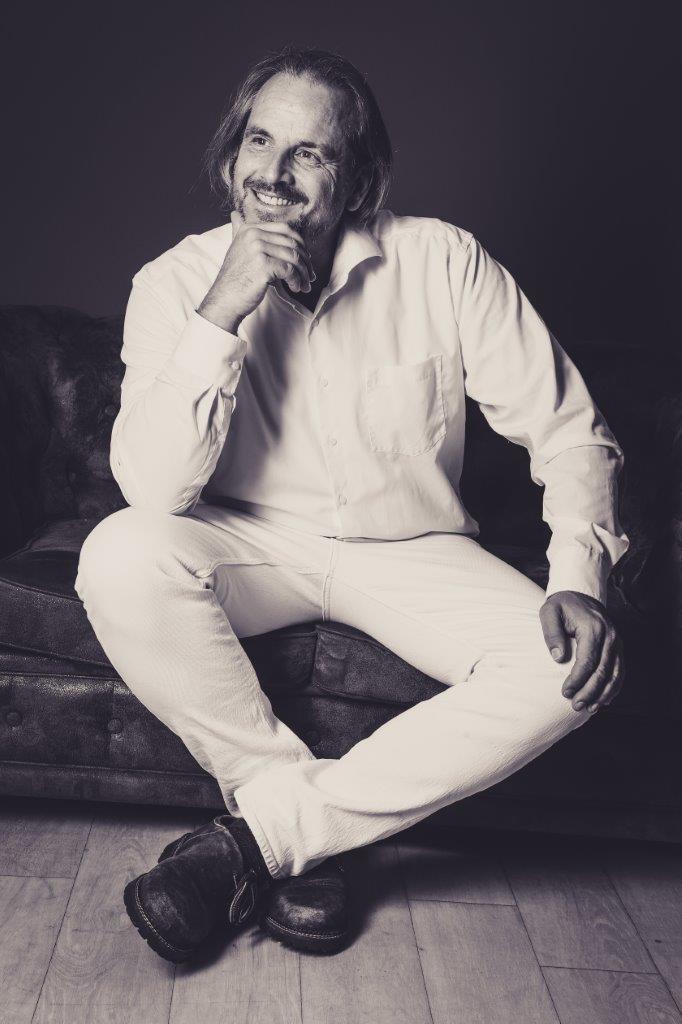
Gabriel Waldeyer My vision is a society in which economic success is more strongly linked to social benefit.

People should be able to deploy their abilities meaningfully – with greater self-determination, responsibility and fair opportunities.

Companies could be assessed more strongly by the real contribution they make to society, the environment and quality of life – not only by short-term returns.

At the same time, a free society still needs competition, innovation and performance incentives. What is decisive, however, is that economic dynamism does not permanently lead to extreme wealth concentration, indebtedness or social division.

Many of today's problems – inflation, real estate bubbles, growth pressure or rising inequality – are, in my view, also connected to the structure of our monetary system.

That is why I engage with various reform ideas around monetary order, circulation-secured money, common good economics, decentralised economic cycles and monetary reform approaches.

🎓 Role Models and Inspirers

The following thinkers, economists, authors and social critics have shaped my perspective particularly strongly:

Peter Haisenko
Humane Market Economy
Silvio Gesell
Monetary and land reform
Werner Onken
Free Economy research
Michael Ende
Cultural critique of money and time economics
Volker Pispers
Social and financial critique
Prof. Silja Graupe
Pluralism in economics
Bernhard Lietaer
Complementary currencies
Prof. Margrit Kennedy
Interest critique and monetary reform
Helmut Creutz
Analysis of monetary redistribution
Bernd Hückstädt
Gradido
Prabhat Ranjan Sarkar
PROUT
Erich Fromm
Critique of Alienation and Consumerism
Eugen Drewermann
Critique of Fear and Power
Mahatma Gandhi
Non-violent social change
Christian Felber
Economy for the Common Good
Kalle Björn Pipoh
Integrated Monetary System Economy (IGO)
Christian Kreiß
Critique of financial and growth systems
Rudolf Steiner
Social Threefolding
Alexander Caspar
The New Money
Götz Werner
Unconditional Basic Income
Yannis Varoufakis
Critique of modern financial structures
Nature photograph
🔄 Four Steps of Transformation

The following steps are not a rigid political programme, but a possible path of development – long-term, open, open to discussion. Many elements can be tested independently of one another and introduced incrementally. What connects them: the will to address structural root causes, not merely to manage symptoms.

1️⃣
Monetary Foundation (HME / RICH)
Abolition of interest and compound interest. Circulation-secured money that cannot be hoarded and therefore generates no concentration of power. Cooperative Monetative instead of private money creation. A monetary system that promotes innovation, offers entrepreneurs fair access to capital – regardless of network or background – and allows the real economy to flourish, rather than paralyse it with interest burdens. At the same time, structural dysfunctions of turbo-capitalism – the debt spiral, wealth concentration, the Cantillon Effect – are to a significant degree resolved systemically.
Estimated impact: at least 60% of the systemic damage of the current FIAT system resolved sustainably!
2️⃣
Complementary Economic and Currency Reforms
Economy for the Common Good (Christian Felber) as an assessment framework for companies. Integrated Monetary System Economy IGO with ECO and TFE (Kalle Björn Pipoh). Regional currencies such as Chiemgauer, Sardex and Minuto as living experiments in economic decentralisation. The first seeds of associative economics according to Steiner begin to grow in parallel.

PROUT (P.R. Sarkar) also belongs to this step – and is more advanced than often assumed: PROUT does not presuppose a universal mass shift in consciousness, but rather Sadvipras – spiritually and morally grounded leaders who shape the system from inner integrity. Such people exist. In India the cultural foundation for this runs deep. What is missing is not consciousness – but the overcoming of the caste system, which is precisely what prevents what PROUT needs: that the most capable and purest person leads, regardless of origin and birth. PROUT is thus (especially in cultural circles such as India) implementable today – if the right structures enable it.
3️⃣
Institutional Restructuring: Social Threefolding (structural)
This is no mere administrative reorganisation – it is a paradigm shift in the question of to whom which power legitimately belongs. Rudolf Steiner and Alexander Caspar have clearly named what is still largely conflated today: economic life, legal life and cultural/spiritual life follow their own respective laws and require their own independent institutions.

In economic life, the associative principle prevails: producers, traders and consumers shape things together – not the state, not the market mechanism alone. In legal life, equality applies: democratically legitimised norms that apply to all, without corruption and without particular interests. In cultural/spiritual life – education, culture, science, spiritual life – freedom prevails: no state standardisation, no economic pressure to exploit.

The unified state, which today administers all three domains and does none of them properly, is replaced by three democratically legitimised, mutually independent institutional spheres. This step is achievable by law and constitution – it requires no inner transformation of the population, but political courage and the right intellectual foundation. Education, research, science and culture are thereby freed from the grip of politics and capital, and legal life as a second authority deals exclusively with the legislature, executive (including securing of the national territory) and judiciary. The Monetative is already established for all three domains as a grassroots-democratic fourth state power through Step 1. The distribution mechanisms and logic (free money, gift money, purchasing money) are organised at grassroots-democratic level.
4️⃣
Social Threefolding Lived, Gradido and Inner Transformation
Structures can be reformed. Laws can be written. But whether Social Threefolding truly breathes – whether people in economic life truly think associatively rather than cooperating tactically, whether education is truly shaped free from exploitation logic – that cannot be decreed.

Here begins the realm of the non-enforceable. Gradido (Bernd Hückstädt) describes a world in which money creation is oriented to human existence and creative achievement – not to debt and not to supply and demand. In which value arises from quality, uniqueness and lived solidarity. In which every person knows and occupies their unique place, because they no longer fight for survival, but contribute from inner abundance.

This step presupposes that people begin to recognise their own consciousness as a creative force – not as victims of the system, but as its creators. Not in abstraction, but in every daily decision: how we buy, give, invest, work, appreciate, trust.

Steps 1 to 3 create the outer conditions for this. Step 4 is the inner response – and when it comes, it will complete Steps 1 to 3 from within and allow them to grow beyond themselves.
🌍 Step 1 in Detail – HME / RICH

The Humane Market Economy according to Peter Haisenko is an elaborated reform approach for a more stable, real-economy-anchored monetary and economic system – for a truly free and fair market economy. My own contribution to it – the RICH Eco-System – concretises and extends this approach.

At the centre are questions that anyone asks who looks honestly:

How can money creation be organised democratically and transparently?
How can extreme wealth concentrations be structurally prevented?
How can innovation and entrepreneurial courage be fairly rewarded – regardless of background and network?
How can regional economic cycles be strengthened without demonising globalisation?
How can long-term thinking be economically more attractive than short-term returns?
How can inflation and state debt pressure be overcome structurally – not through symptom management?

The approach presented in the video connects elements from circulation-secured money (Gesell / Steiner), common good economics (Felber), regional economic cycles (Gellerie), monetary reform and a consistent orientation towards the real economy – into a concrete, implementable overall picture as the first basis of a truly sustainable and democratic new world order.

🧭 Consulting

Alongside my information activities on economic reform topics, I also offer personal consulting on professional orientation, self-employment, life design and individual reorientation.